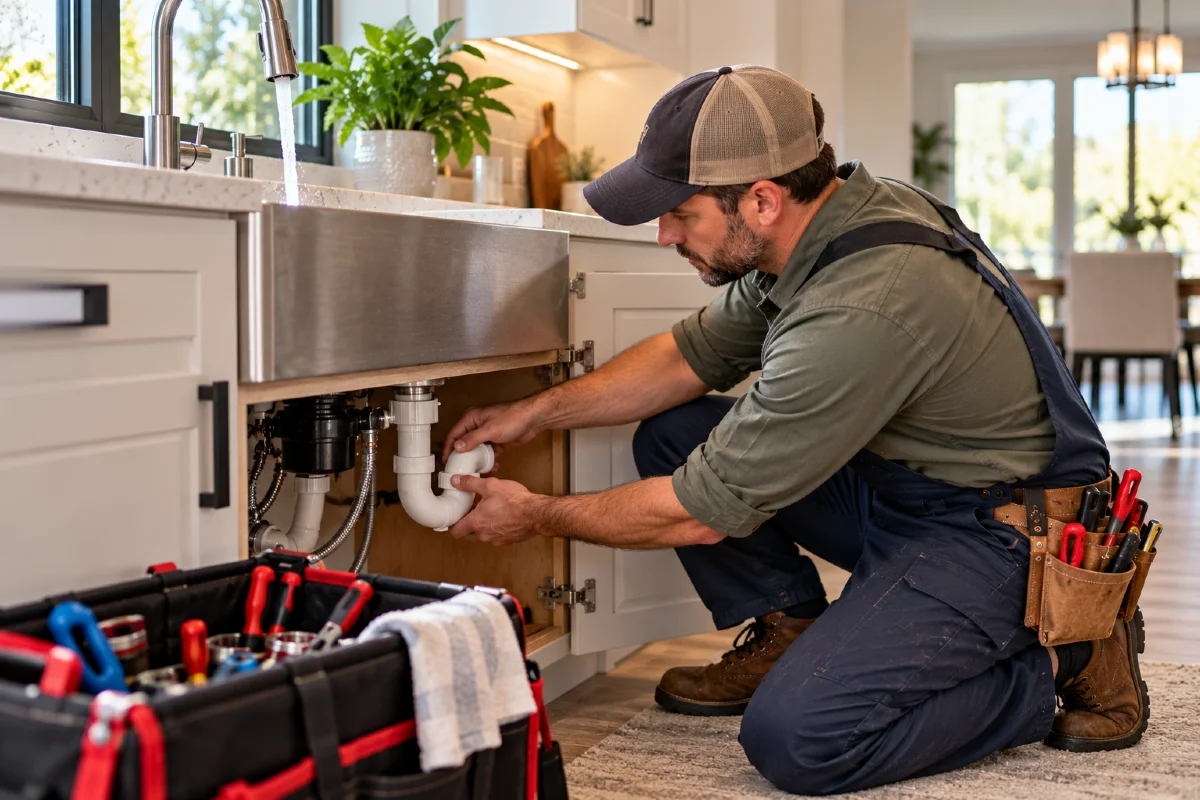
A drip under a sink can become a swollen cabinet base within a week. A slow leak behind drywall can leave a larger damp patch, softened wallboard, and stained trim over a month or season.
Water does not stay at the fitting where it starts. It follows pipe runs, framing, cabinet seams, and floor edges, so leak repair should not wait when water is active, staining is spreading, or a cabinet floor stays damp.
Water under the sink
Customers often call about water under the sink, a faucet that keeps dripping after the handle is off, or a wet spot appearing on the ceiling below a bathroom. A hissing sound in a wall, a musty smell in a cabinet, or a water meter that moves with every fixture off can also point to a leak.
A loose supply connection, worn faucet cartridge, failed valve packing, cracked pipe, and drain joint can all leave water in a similar place. We inspect the fixture and pipe before recommending work because these faults need different parts, access, and repair time.
Leak inspection and pressure test
We start a leak inspection at the fixture, exposed supply lines, shutoff valves, drain connections, and nearby cabinet or wall. We dry the area, run the fixture, inspect joints with a light, and use a moisture meter where staining suggests water behind a surface.
An exposed faucet, valve, or supply tube check commonly takes 20 to 30 minutes. We can read supply pressure with a gauge, since residential plumbing generally operates between 40 and 80 psi, and isolate a fixture to narrow the source.
We can often replace an exposed supply tube, faucet cartridge, packing nut, or accessible valve component during the visit. A concealed pipe break, tile removal, or wall access repair may need another visit after the route, replacement part, and any required sign-off are arranged.
Shutoff valves and wall access
The age and material of the fitting affect the repair. Older galvanized pipe, corroded copper, brittle plastic fittings, and worn compression connections can require more careful removal than a newer accessible supply line.
Access also changes the work. A leak below an open cabinet is different from a pipe behind tile, drywall, insulation, or a finished ceiling. A seized shutoff valve can prevent us from isolating one fixture, and a replacement part that must be ordered can extend the repair beyond the first visit.
We also check whether opening a wall or changing concealed piping needs an inspection sign-off. We explain the affected valve, pipe section, and access point before work moves forward.
Fixture model and cabinet access
Tell us which room holds the leaking fixture and whether water is still running now. Note whether the water appears at a faucet base, under a cabinet, near a shutoff valve, or through a ceiling below.
For a faucet repair, the make and model number from installation paperwork or a parts diagram can help us bring the correct cartridge or seal. Let us know the approximate age of the fixture if you know it, and whether the cabinet, crawlspace, or wall access panel is clear.
Photos of the pipe, valve, and wet area can also help identify the fitting before the visit. Call TF Plumber Leander at (512) 799-9083 before water swells the cabinet base, stains the ceiling, or soaks more wallboard.
Looking for something else? Try toilet repair or the home page.